How to Score Darts
A quick, clear guide to dartboard scoring for beginners and pub players.
Dartboard Scoring Basics
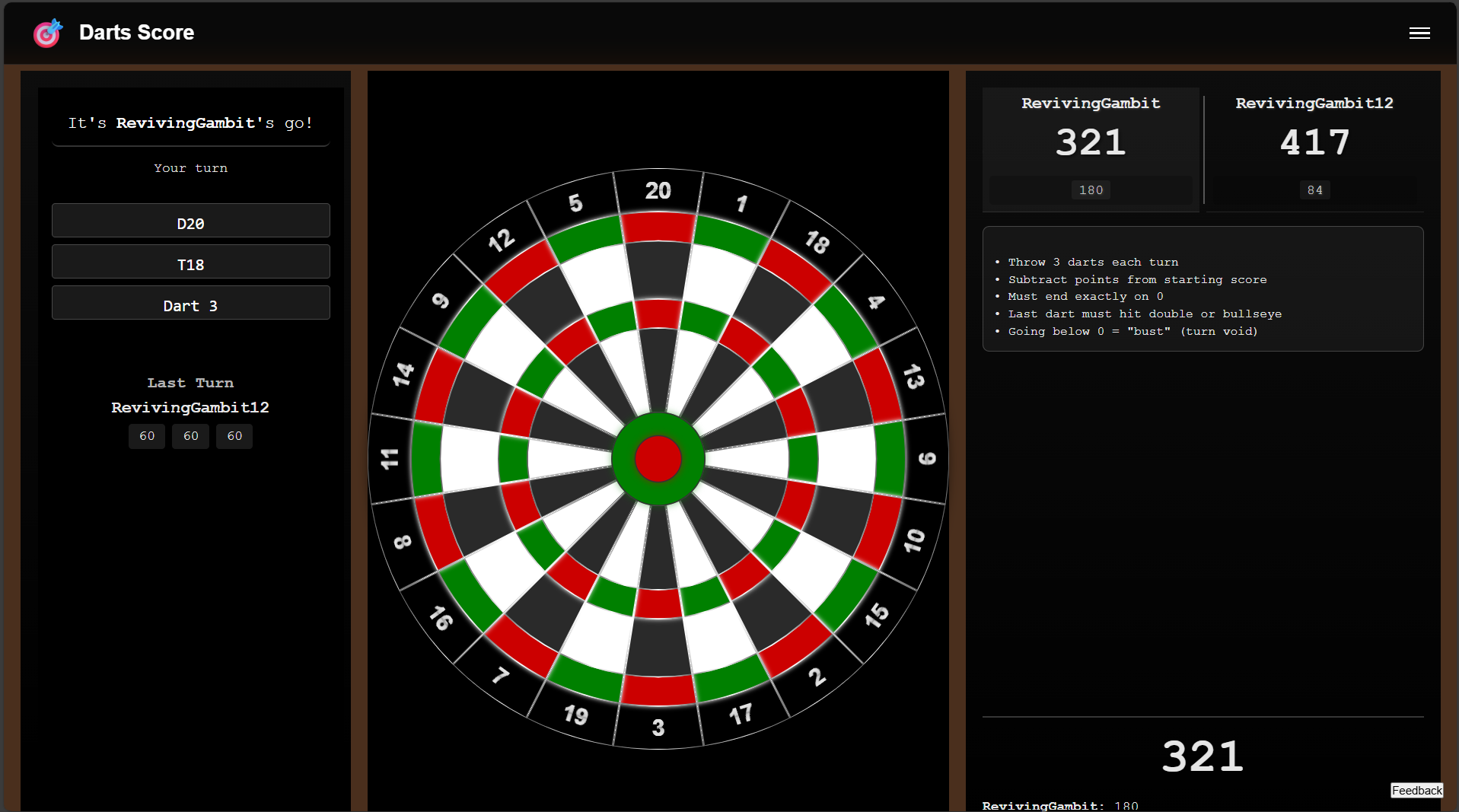
A standard dartboard has numbers 1–20 around the edge and several scoring areas inside each segment. Once you understand singles, doubles, trebles, and the bullseye, you can score almost any game: 501, 301, Cricket and more.
This guide keeps it simple and then adds a few examples, so you can score confidently in pub, home and league games.
Dartboard Layout & Ring Values
The standard board has numbers 1–20 arranged around the edge, with scoring rings:
-
Single – the large inner and outer areas of each segment.
Scores exactly the number shown (e.g. single 20 = 20). -
Double ring – the thin outer ring around the board.
Doubles score twice the segment value (e.g. double 16 = 32). -
Treble ring – the thin inner ring halfway to the centre.
Trebles score three times the value (e.g. treble 20 = 60). - Outer bull (usually green) – scores 25 points.
- Bullseye (usually red) – scores 50 points.
Missing the board completely or hitting the surround scores 0.

How a Turn Is Scored
Each turn you throw up to three darts. Add the score from all darts to get your turn total. In games like 501 or 301, you subtract that total from your remaining score.
- Example: S20, T19, D16 → 20 + 57 + 32 = 109.
- A dart that misses the board or bounces out scores 0.
- If a dart lands on a wire, the segment it is inside decides the score.
In most games, the scorer calls out each dart (e.g. “single 20, treble 19, double 16”) and then announces the total for the visit.
Common Scoring Examples
| Throw | Maths | Total |
|---|---|---|
| T20, T20, T20 | 60 + 60 + 60 | 180 |
| T20, T19, T18 | 60 + 57 + 54 | 171 |
| Outer Bull, T20, D20 | 25 + 60 + 40 | 125 |
| S20, S5, S1 | 20 + 5 + 1 | 26 |
| Miss, T20, Miss | 0 + 60 + 0 | 60 |
Once you’re comfortable with doubles and trebles, these totals become easy to recognise.
Scoring in 501 and Other x01 Games
In games like 501 and 301, you start on a fixed number of points and count downwards:
- Start on 501 (or 301) and write that at the top of the board or app.
- Each turn, subtract your total from your remaining score.
- Most formats require you to finish on a double or bull to reach exactly 0.
- If your score goes below 0 or ends on 1, the turn is a bust and you revert to your previous total.
A digital scorer like Darts Score handles all the maths, busts and finishing rules for you automatically.
Tips for Fast, Fair Scoring
- Call out each dart clearly so everyone hears the segment and value.
- Confirm the total before removing darts from the board.
- Stand back from the board while the scorer is counting.
- Use a scorer or app to avoid mental arithmetic errors in longer matches.
- For games like 501, remember you usually must finish on a double or bull unless house rules say otherwise.
Agree house rules at the start (bust rules, bull rules, double-out) so everybody scores the same way.
Dartboard Scoring FAQ
-
Does a dart that falls out still count?
No. If the dart doesn’t stay in the board long enough to be scored, it counts as 0. -
What if the dart is right on the wire?
The score is based on the segment the point is actually in, not where the flight appears. -
Is outer bull always 25 and bullseye always 50?
Yes on a standard board. Some house or practice games use different rules, but the values stay the same. -
Do I always have to finish on a double?
Only in specific games (like standard 501 double-out). In others, you may not need a double at all.
Practise Your Scoring With Darts Score
Darts Score tracks scores, busts and averages for you — perfect for learning, practice and match nights.